Interaction Design
IoT
mag.net
Envisioning an IoT Interactive Objects System for the university’s innovation center
Project Overview
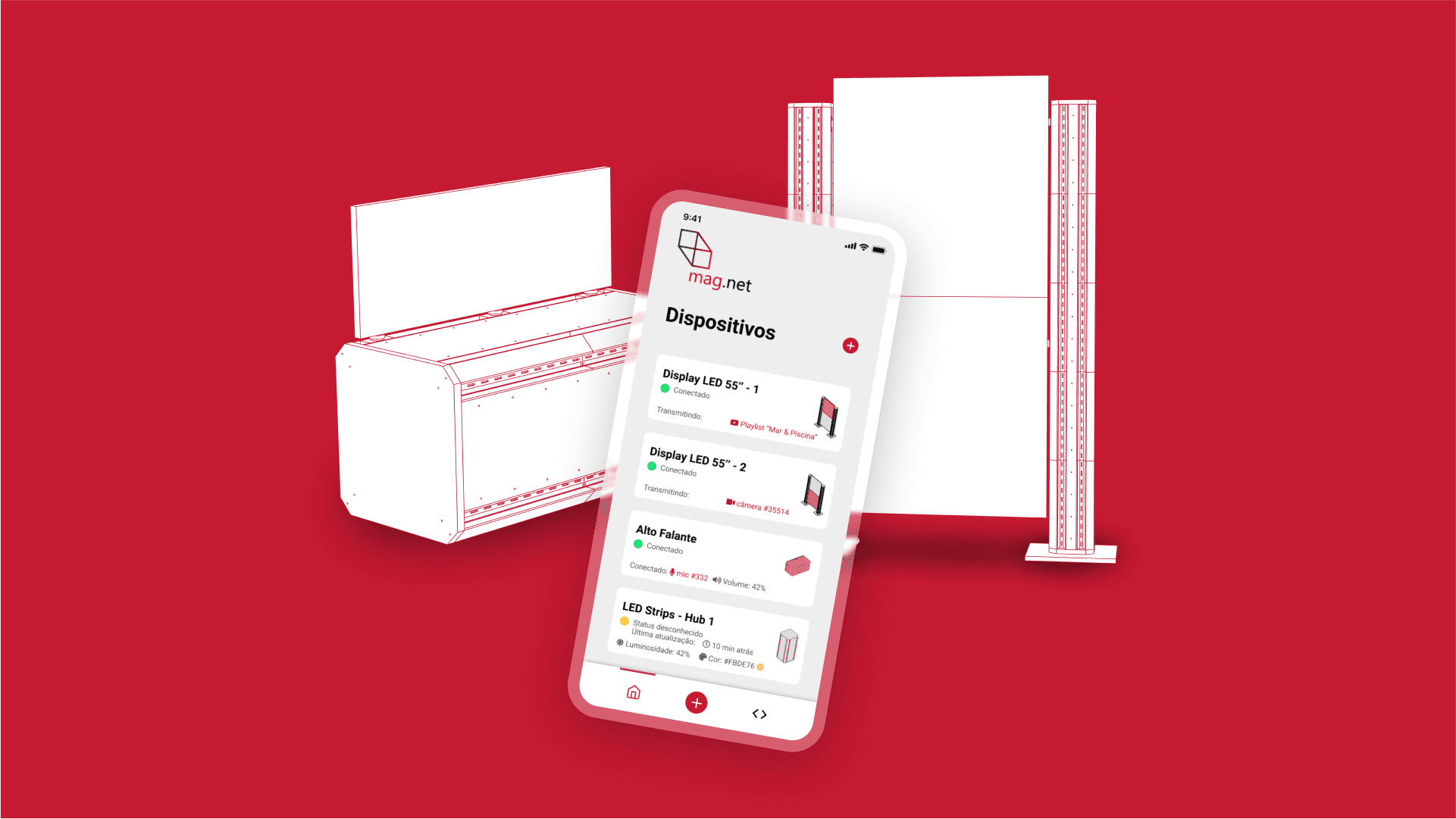
For my final thesis project at the Faculty of Architecture and Urbanism (FAU USP), I designed an interactive IoT (Internet of Things) system for InovaUSP, the university’s new research and innovation center. The project aimed to explore the interactions between people and computers in the physical environment.
Based upon a reflection on digitization and the ways in which it points to the future, and also from the Interactive Architecture and Metadesign approaches, an open design, open source system of interactive objects with digital fabrication was proposed for InovaUSP’s (the new research and innovation centre of the University of São Paulo) building.
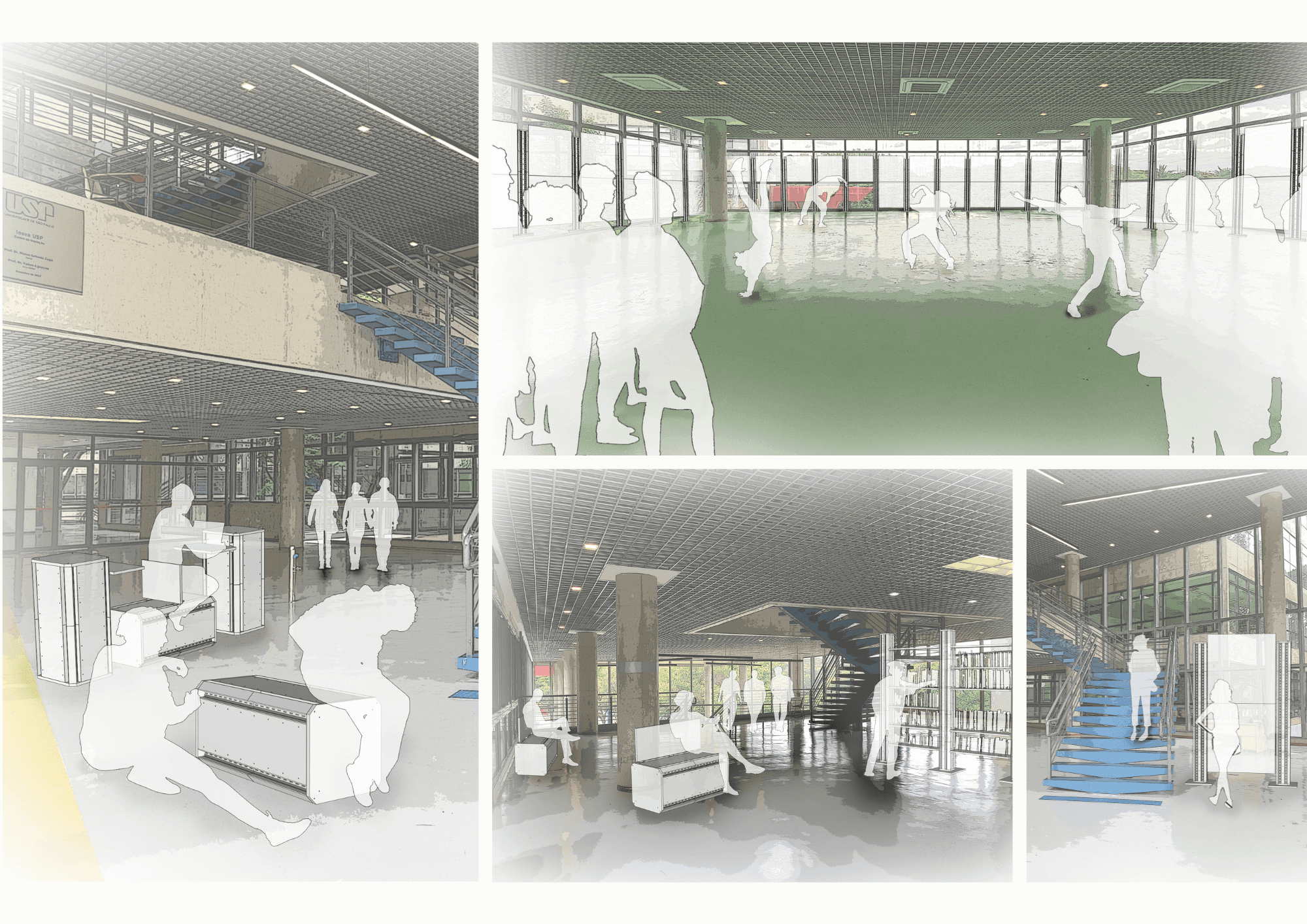
The project is intended as a collaborative platform that absorbs the unpredictability inherent in any complex interactive system. The goal was to bring life and interactivity to the building's entrance area, as well as playful and/or functional digital interventions that connect with the space and the institution's identity.
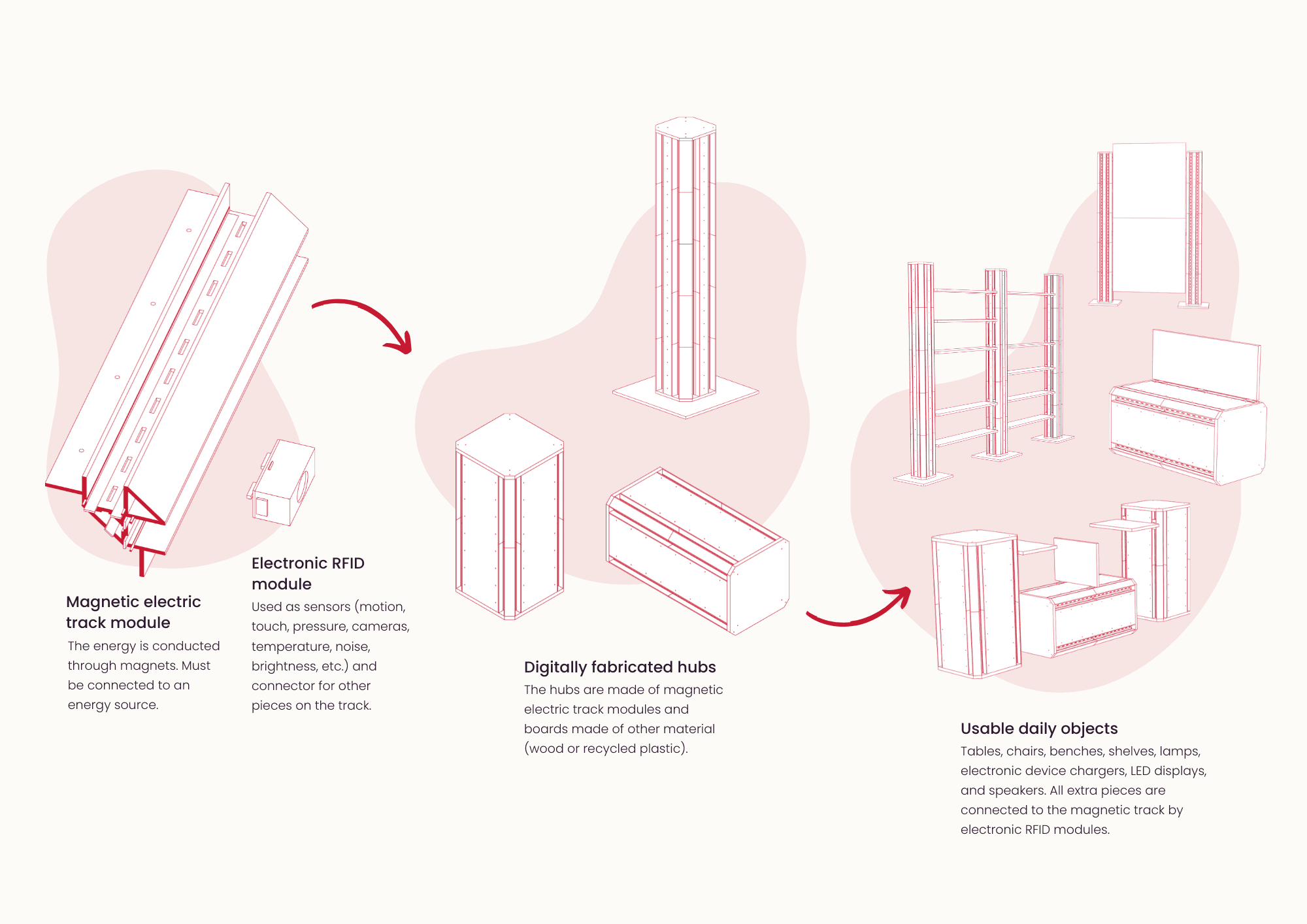
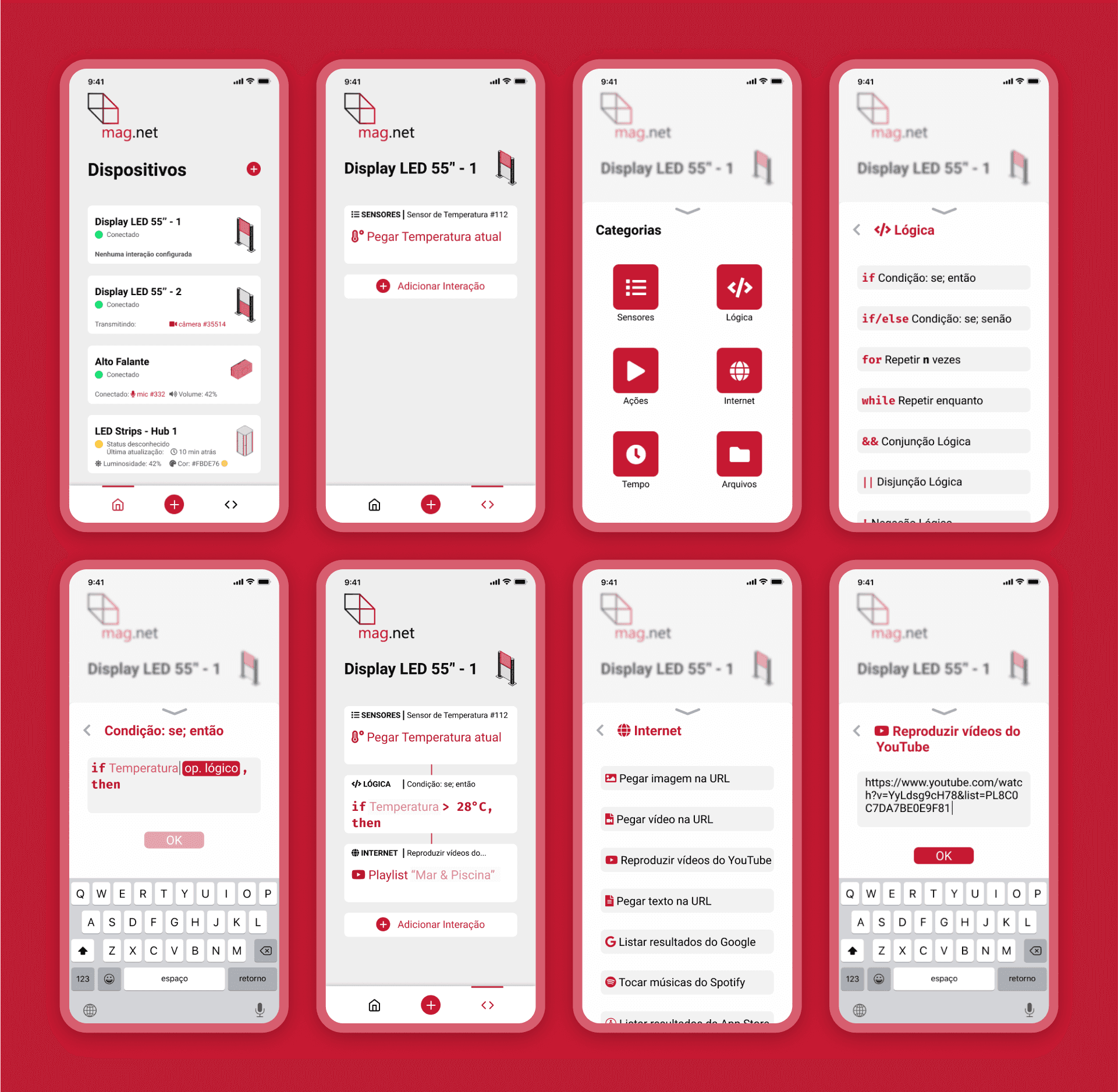
The proposed system functions as a hub with magnetic tracks transferring energy to various modules that can be freely inserted and interchanged. Each module is associated with an object and identified through an IP address and RFID technology. Using this information, the objects and their interactions with each other, with people, and with the environment all become programmable.
Design Process
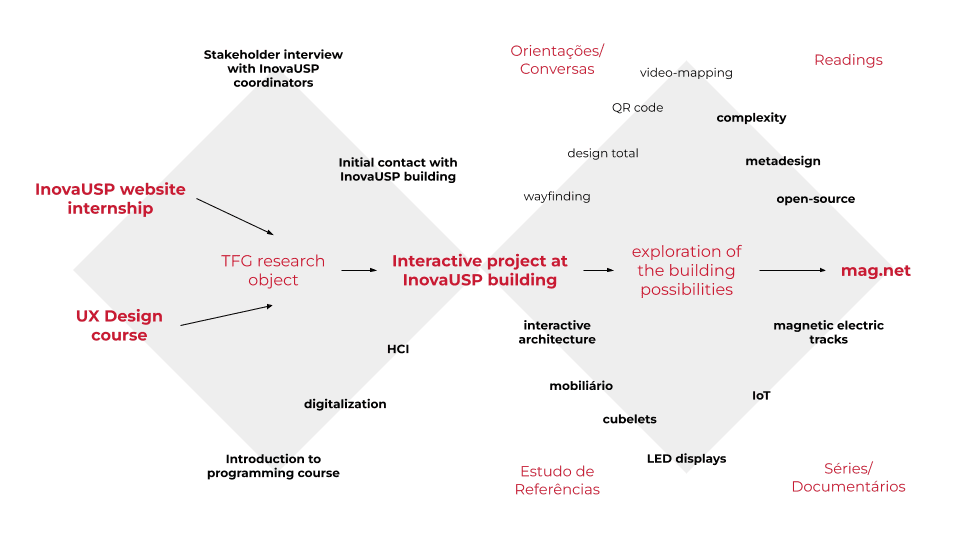
Literature Review: Conducted an in-depth review of academic papers and books on interactive architecture, interaction design, and interactive product design.
Research: Carried out semi-structured interviews and used affinity mapping to gather and organize insights from stakeholders.
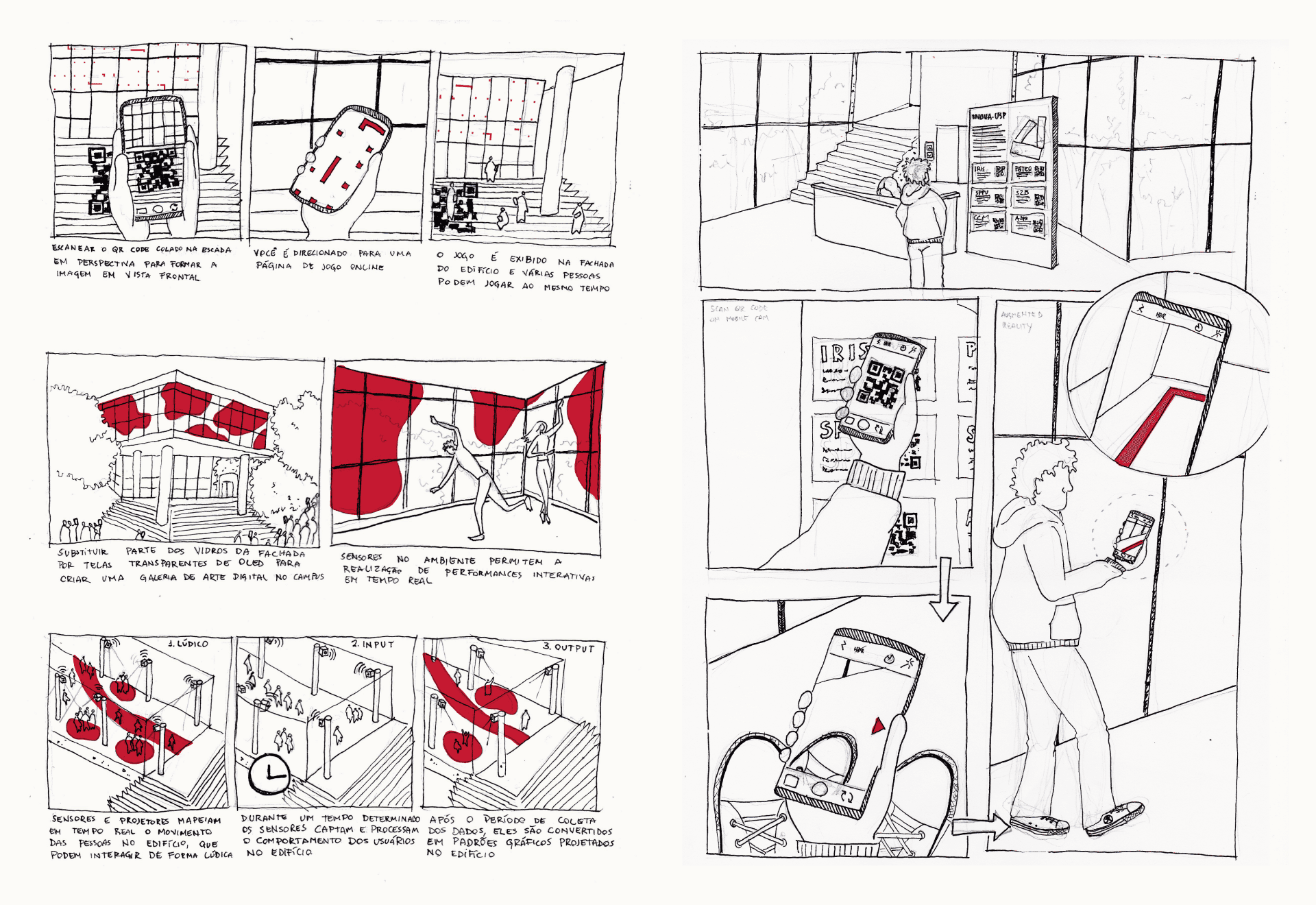
Ideation: Developed concepts through sketches and storyboards to visualize potential solutions and user interactions.
Design Proposal: Defined the design concept and presented the proposal, detailing how the system would work and integrate into the physical space.
Outcome
The project received the highest grade from the thesis committee and was published in the university's academic repository, which you can view here. This project demonstrated the potential of blending physical spaces with digital interactions, opening up possibilities for further development in interactive architecture.
Due to NDAs, I might have kept specific data, insights, and sensitive details out of this case study. If you'd like to discuss or understand something further, feel free to reach out!
Looking forward to hearing from you!